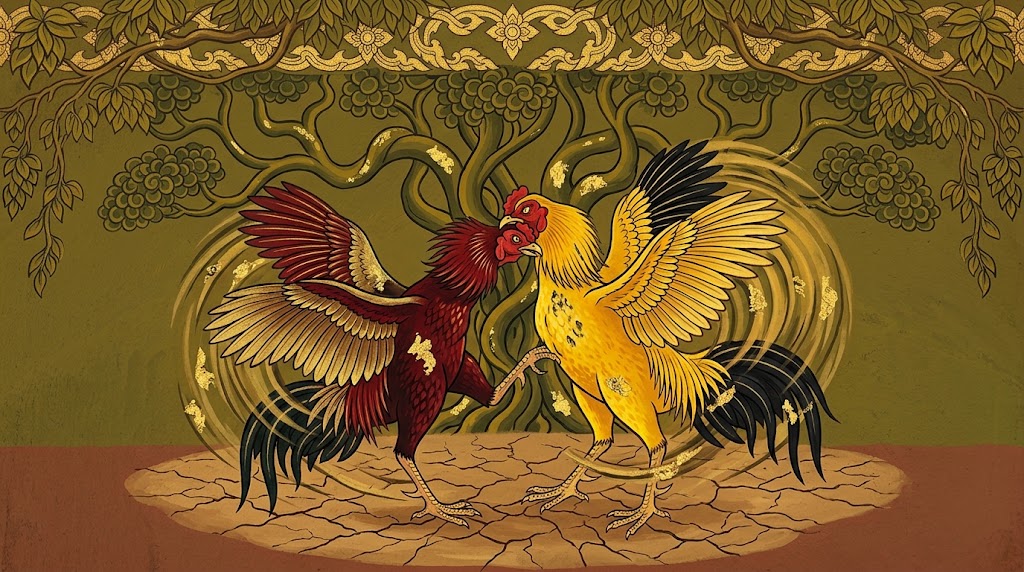
Gamefowl Breeding Farm: How a Breeding Program Works
A Gamefowl Breeding Farm is more than a place where breeding birds are kept. A structured operation connects breeding objectives, breeder selection, mating decisions, reproductive results, pedigree information, and day-to-day records so each generation can be evaluated against the goals of the breeding program.
A structured breeding program therefore emphasizes defining what the program is trying to achieve, selecting suitable breeding stock, documenting ancestry and results, and reviewing whether each mating moves the flock toward those goals rather than relying on bloodline names alone.
What Is a Gamefowl Breeding Farm?
A Gamefowl Breeding Farm is a managed poultry operation in which breeding objectives, breeder selection, mating decisions, parentage records, reproductive results, and offspring evaluation are connected across breeding cycles.
FAO guidance on animal breeding places livestock-development objectives, production systems, and the design of breeding programmes among the core elements of a breeding strategy. For gamefowl breeders, the practical value of that approach is that each breeding decision can be tied to a stated goal and reviewed later.
A practical breeding-farm cycle can be summarized as:
- define the breeding objective;
- select suitable breeders;
- plan matings;
- record parentage and reproductive information;
- evaluate offspring and breeding results; and
- use those records to guide the next breeding decision.
Start With a Clear Breeding Objective
A breeding program is easier to evaluate when the breeder knows what characteristics or outcomes are being selected before choosing mating pairs. The objective should relate to characteristics that can be observed or documented consistently.
Depending on the stated objective, relevant considerations can include reproductive soundness, general health, physical condition, adaptation to the farm environment, and other measurable characteristics that can be followed across breeding cycles.
Without a defined objective, it becomes difficult to determine whether a particular pairing produced a useful result or whether the program is simply repeating matings without a consistent basis for comparison.
How Gamefowl Breeders Select Breeding Stock
A practical approach is to evaluate breeding stock as individual birds rather than assuming that a bloodline name alone establishes breeding value. Mississippi State University Extension notes that breeder birds should be healthy and free from physical problems that interfere with normal mating or egg production, and it defines selection in breeding as choosing parents for the next generation.
A breeder-selection review can consider:
- general health and physical soundness;
- ability to eat, drink, move, and reproduce normally;
- reproductive history when reliable records exist;
- pedigree and known relationships;
- characteristics relevant to the stated breeding objective; and
- whether the bird’s history is documented well enough to support the decision.
Appearance can be one observation, but appearance alone does not establish fertility, genetic merit, offspring quality, or future breeding success.
Build a Breeding Program, Not Just a Collection of Birds
A Gamefowl Breeding Farm becomes more useful as a breeding program when each generation produces information that can guide the next one. Owning many breeding birds does not automatically create a structured program.
A structured gamefowl breeding program can connect the objective with breeder selection, mating decisions, offspring records, and evaluation. When the objective changes, the information being collected may also need to change.
A simple feedback loop is:
OBJECTIVE → BREEDERS → MATINGS → RECORDS → OUTCOMES → REVIEW
This framework keeps each mating connected to a reason, a recorded outcome, and a decision about whether the approach should be repeated or changed.
Why Breeding Records Matter
Records turn breeding decisions into information that can be reviewed later. FAO guidance on integrated animal-recording systems identifies performance and pedigree recording, health and disease monitoring, traceability, and animal genetic-resource management as purposes that organized recording systems can support.
Useful gamefowl breeding records can include:
- unique bird identification;
- sire and dam when known;
- date or season of mating;
- pair or pen identification;
- eggs set for incubation;
- fertility observations where available;
- hatch results;
- offspring identification;
- health or management events relevant to interpretation; and
- notes connected to the breeding objective.
A Gamefowl Breeding Farm does not need an unnecessarily complicated database to benefit from record keeping. The system needs to be consistent enough to connect parents, matings, reproductive outcomes, and offspring without relying entirely on memory.
What Pedigree and Bloodline Records Can—and Cannot—Tell You
Gamefowl bloodlines and pedigree records can describe ancestry and relationships, but pedigree should not be treated as automatic proof of quality.
A pedigree can help answer questions such as:
- Which birds share the same parents or grandparents?
- Where does repeated ancestry appear?
- Which matings produced particular offspring?
- How widely has a particular family contributed to the breeding population?
Pedigree describes ancestry. By itself, it does not establish health, fertility, structural soundness, genetic superiority, or the future quality of every offspring.
Bloodline descriptions become more useful when they can be connected to reliable parentage, reproductive, health, and offspring records rather than depending only on a family name or seller description.
Manage Genetics and Relatedness Carefully
Gamefowl genetics should not be reduced to a claim that one named line contains universally superior genes. FAO breeding-strategy guidance includes improving pedigree recording, reviewing selection and mating structure, and checking whether a breeding programme is delivering as expected.
Pedigree records can reveal repeated ancestry and help inform mating decisions when the parentage data are reliable. They should not be treated as a precise measure of genetic distance unless the records and evaluation method support that conclusion.
No single relatedness or inbreeding threshold should be assumed to apply to every gamefowl population without evidence appropriate to that population, breeding objective, pedigree quality, and genetic-management system.
Plan Mating Decisions Around the Objective
Mississippi State University Extension describes several poultry mating systems, including mass mating, pen mating, stud mating, and artificial insemination. These systems differ in the degree of control they provide over parentage and mating.
No mating system is automatically the best choice for every breeding program. The practical choice depends on the breeding objective, number of birds, available facilities, record requirements, welfare considerations, and the need to establish parentage.
When individual parentage matters, the management system needs to make that ancestry traceable. If parentage cannot be established reliably, pedigree claims should be presented with that limitation.
Track Fertility, Hatchability and Offspring Outcomes
Reproductive results provide useful feedback about breeder management, but they should not be treated as guaranteed measures of genetic quality. Mississippi State University Extension connects breeder-flock health and management with the production of fertile hatching eggs and healthy chicks.
Useful records can include eggs set, evidence of fertility, hatch results, chick condition, and repeated outcomes from the same mating. Records collected across more than one breeding cycle provide more context than a single successful or unsuccessful hatch.
When results change, possible influences can include breeder condition, nutrition, health, age, environment, egg handling, incubation, mating management, and genetics. A single outcome should not automatically be attributed to bloodline or genetics alone.
Manage Feed, Water, Housing and Health Every Day
A breeding farm still depends on ordinary poultry husbandry. Breeding plans cannot compensate for unsuitable feeding, contaminated water, poor housing, weak sanitation, or unmanaged health problems.
Mississippi State University Extension recommends clean fresh water, suitable feeder and drinker access, and a complete breeder ration as part of breeder-flock management. University of Georgia Extension also identifies flock records, feed, water, environmental-control systems, and observation for health problems as recurring breeder-operation tasks.
The University of Georgia guidance is written for commercial hatching-egg production, so its commercial production figures and operating assumptions should not automatically be transferred to every gamefowl farm. Breeding results should be interpreted alongside the conditions under which the breeders are managed.
For a broader husbandry overview beyond breeding management, see How to Raise Gamefowl.
How to Evaluate a Gamefowl Breeding Program
Evaluation should compare actual results with the original breeding objective. A breeder should be able to explain what information is being collected, why it matters, and how that information changes future decisions.
A useful review asks:
- Is the breeding objective clearly defined?
- Are breeders individually identified?
- Can parentage be traced where pedigree claims are made?
- Are reproductive results recorded consistently?
- Are offspring evaluated using consistent criteria over time?
- Are health and management factors recorded when they could affect results?
- Is repeated ancestry considered before future matings?
- Do records actually influence the next selection decision?
A farm that can answer these questions with documented information has a stronger basis for reviewing its breeding decisions than one relying only on memory, reputation, or bloodline labels.
Common Breeding-Farm Mistakes
- Breeding without a defined objective: without a target, results are difficult to evaluate consistently.
- Choosing breeders from appearance alone: visible characteristics do not automatically establish reproductive or genetic value.
- Treating bloodline as proof of superiority: ancestry is information, not a guarantee.
- Keeping pedigree without outcome records: ancestry becomes more useful when linked to reproduction and offspring data.
- Ignoring management conditions: health, nutrition, environment, and incubation can affect observed outcomes.
- Drawing broad conclusions from one mating: an isolated result may not represent a repeatable pattern.
- Using an overly complicated record system: a system that is not maintained consistently provides limited practical value.
- Ignoring repeated ancestry: relationships can be overlooked when pedigree information is incomplete or unused.
FAQ
What is a Gamefowl Breeding Farm?
It is a managed breeding operation that connects defined objectives, breeder selection, planned matings, reproductive monitoring, parentage records, offspring evaluation, and repeated review of breeding decisions.
What records should gamefowl breeders keep?
Useful records can include bird identification, sire and dam when known, mating dates, breeding pairs or pens, reproductive results, hatch information, offspring identity, relevant health or management events, and observations connected to the breeding objective.
Are gamefowl bloodlines the same as pedigrees?
No. A bloodline is a broader family or lineage description, while a pedigree documents ancestry for a particular animal across identified generations. The reliability of either description depends on the quality of the underlying records.
Does a pedigree prove that a bird is a good breeder?
No. Pedigree describes ancestry and relationships. It does not independently prove fertility, health, structural soundness, genetic superiority, or the quality of future offspring.
Why does a breeding program need an objective?
An objective establishes what the breeder is selecting for and provides a basis for evaluating results. Without it, there is no consistent standard for deciding whether a mating should be repeated or whether selection should change.
Can genetics alone predict breeding results?
No. Genetics matters, but observed outcomes can also be influenced by health, nutrition, environment, management, reproduction, egg handling, incubation, and other factors. Breeding records are more useful when these influences are considered together.
Is there one best mating system for every breeding farm?
No. The appropriate system depends on the breeding objective, number of birds, available facilities, record requirements, need for known parentage, and practical management conditions.
Key Takeaways
A Gamefowl Breeding Farm is strongest when breeding decisions are treated as a documented cycle rather than a series of isolated matings. Define the objective, select healthy and suitable breeders, plan matings, record ancestry and reproductive results, evaluate offspring consistently, and use those findings to improve the next decision.
- Start with a breeding objective before selecting pairs.
- Evaluate individual breeders rather than relying only on bloodline names.
- Connect pedigree records with reproductive and offspring outcomes.
- Use records to review whether a mating actually supported the objective.
- Track repeated ancestry without inventing universal genetic thresholds.
- Interpret breeding results alongside health, nutrition, environment, and management.
- Do not treat pedigree, bloodline, or one successful hatch as proof of genetic superiority.
Other Links
Readers can also visit เว็บตรง ปลอดภัย and เว็บพันธมิตร. These sites are separate from the poultry-breeding references listed below.
References
Food and Agriculture Organization of the United Nations. Breeding Strategies for Sustainable Management of Animal Genetic Resources. FAO Animal Production and Health Guidelines No. 3, Rome, 2010.
Food and Agriculture Organization of the United Nations, Commission on Genetic Resources for Food and Agriculture. Guidelines for Development of Integrated Multipurpose Animal Recording Systems. Guidelines endorsed in 2015.
Mississippi State University Extension Service. Hatching Quality Chicks.
University of Georgia Cooperative Extension. Guidelines for Prospective Contract Hatching Egg Producers. Bulletin 1214, full review October 15, 2024.