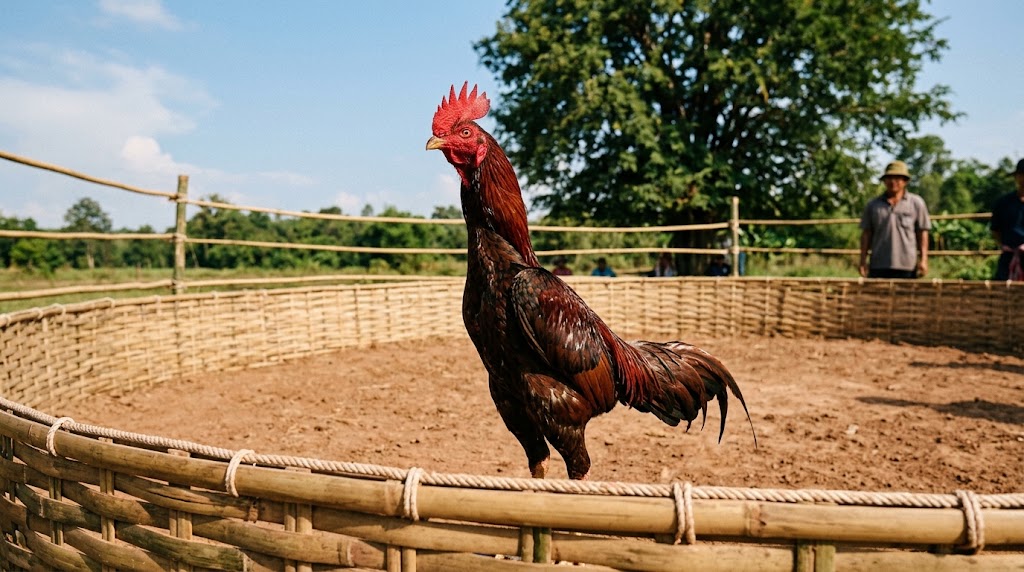
Gamefowl Breeding Techniques: Methods, Selection and Breeding Programs
Gamefowl Breeding Techniques are structured approaches for selecting breeding birds, planning matings, recording ancestry and traits, and evaluating offspring across generations. A sound breeding program begins with a clear objective and uses consistent records rather than relying on one mating method or one bird alone.
Common approaches include linebreeding, inbreeding, outcrossing, and crossbreeding. Each changes genetic relationships within a population in a different way, so the choice should match the breeding objective, available ancestry information, and the need to maintain sufficient genetic variation.
Key Takeaways
- A breeding program should begin with a clearly defined objective.
- Breeder selection, mating decisions, records, and offspring evaluation work together across generations.
- Linebreeding, inbreeding, outcrossing, and crossbreeding are not interchangeable methods.
- Breeding related birds can increase homozygosity, making ancestry records increasingly important.
- Outcrossing and crossbreeding can add genetic variation but do not guarantee superior offspring.
- Records collected across generations provide more useful evidence than judging an entire line from a single offspring.
What Are Gamefowl Breeding Techniques?
Gamefowl breeding methods are planned approaches used to select breeders and organize matings toward defined objectives over successive generations.
Breeding involves more than pairing two birds. The University of Kentucky defines poultry breeding as mating birds either to maintain or increase a flock or to select individuals for improvement in one or more characteristics. It also emphasizes understanding poultry genetics before beginning a breeding program.
University of Kentucky Poultry Breeding
For a broader introduction to the birds, see Gamefowl.
Start With a Clear Breeding Objective
Before deciding how to breed gamefowl, first define what the breeding program is intended to maintain or improve.
An objective is easier to evaluate when it is tied to characteristics that can be observed or measured consistently. Depending on the program, these may include growth, reproductive characteristics, health, survivability, body structure, or other clearly defined traits.
Changing the objective repeatedly makes it difficult to compare generations. The same problem occurs when breeder selection depends only on reputation, appearance, or ancestry labels without reliable records.
A structured breeding objective should therefore identify the characteristics being selected and establish a consistent way to observe or measure them. Keeping the same evaluation criteria across generations makes later comparisons more meaningful and helps distinguish repeatable patterns from isolated observations.
Evidence verdict: Breeding objectives are easier to evaluate when selection is based on consistent observations or measurements that can be compared across generations.
How Are Breeders Selected?
Breeder selection should match the objective of the breeding program. A bird’s appearance, reputation, or line name alone does not establish what combination of traits its offspring will inherit.
Useful information can include:
- general health and reproductive suitability;
- observable characteristics related to the breeding objective;
- reliable pedigree or ancestry information;
- records from previous generations;
- offspring outcomes from earlier matings; and
- consistent measurements when measurable traits are part of the objective.
Visible characteristics should also be interpreted carefully. Phenotype reflects both inherited factors and the conditions under which a bird develops, so appearance alone cannot provide a complete picture of genetic potential.
For broader external browsing, เว็บตรง ปลอดภัย is available as a separate external resource.
Main Gamefowl Breeding Methods
No single mating system is automatically best for every breeding population. The appropriate method depends on the objective, ancestry of the available birds, population structure, and the amount of genetic variation that needs to be maintained.
Linebreeding
Linebreeding is a form of inbreeding used to increase the genetic contribution of selected ancestry within a population. Because it involves related individuals, the degree of relatedness and the breeding structure should be considered when planning repeated matings.
Linebreeding does not guarantee that a desirable characteristic will become fixed. Outcomes still depend on the genetic characteristics of the breeders, their relationships, selection decisions, population structure, and what is observed in later generations.
Inbreeding
Inbreeding is the mating of related individuals. Its primary genetic consequence is increased homozygosity within the offspring.
Related individuals can share alleles inherited from common ancestors. When relatives are mated, those shared alleles have a greater chance of being paired in their offspring, increasing homozygosity. This also helps explain why recessive characteristics can become more visible within inbred populations.
FAO explains that inbreeding increases homozygosity and identifies linebreeding as a form of inbreeding used to increase the genetic contribution of selected ancestry within a population. FAO — Inbreeding and Linebreeding Genetics
For that reason, repeated close breeding should be accompanied by reliable ancestry records and monitoring of reproductive performance, survival, growth, health, and other characteristics relevant to the breeding objective.
Outcrossing
Outcrossing generally involves mating birds from less-related lines within a wider breeding population.
This can introduce genetic variation into a line that has become highly related. It can also combine ancestry from different families.
Outcrossing does not guarantee improvement. Offspring may show a wider range of characteristics, so the results still need to be compared with the original breeding objective.
Crossbreeding
Crossbreeding involves mating birds from distinct breeds or populations. In poultry breeding, it can be used to combine genetic contributions from different populations and, in some circumstances, benefit from heterosis.
FAO describes crossbreeding, back-crossing, and within-line selection as approaches that have been used to improve indigenous poultry. FAO also notes limitations: crossbreeding and back-crossing require separate populations to be maintained, while within-line selection works best at sufficient scale and under controlled conditions.
Evidence verdict: Linebreeding, inbreeding, outcrossing, and crossbreeding alter genetic relationships in different ways. None removes the need for breeder selection, records, and evaluation of later generations.
How to Build a Gamefowl Breeding Program
A practical gamefowl breeding program works best as a repeating cycle rather than a one-time mating decision.
- Define the objective. Decide which characteristics should be maintained or improved.
- Identify suitable breeders. Compare health, ancestry, relevant characteristics, and available records.
- Record parentage. Keep enough ancestry information to trace relationships between generations.
- Choose a mating approach. Select the method that fits the objective and the relationships among available breeders.
- Track offspring. Record which parents produced each generation and monitor the characteristics that matter to the program.
- Evaluate the results. Compare offspring with the original objective rather than focusing on one exceptional bird.
- Use the results in the next generation. Future breeder choices should reflect what previous matings actually produced.
This process cannot guarantee a particular outcome because biological variation remains even when pedigree and mating decisions are carefully controlled.
Why Breeding Records Matter
Records make it possible to compare breeding decisions across generations.
Useful records may include:
- identity of the sire and dam;
- generation or hatch information;
- mating pairs;
- pedigree relationships;
- observable characteristics linked to the breeding objective;
- health and reproductive information; and
- offspring outcomes.
Without reliable records, it becomes difficult to know whether a characteristic repeatedly appears within a family, whether relatedness is increasing, or whether a change observed in later generations follows a particular breeding decision.
Accurate parentage is especially useful when breeding related birds because the degree of relationship cannot be managed reliably from memory alone.
Genetic Diversity and the Risks of Over-Selection
Selection determines which birds contribute genes to later generations. When a small number of breeders repeatedly contribute to a population, genetic diversity can narrow over time.
FAO emphasizes the importance of indigenous poultry populations as genetic resources and warns that replacing diverse indigenous breeds with a narrower range of commercial strains can threaten poultry genetic diversity.
At the breeding-program level, this broader genetic-diversity principle supports avoiding unnecessary narrowing of the breeding population while pursuing defined objectives.
There is no single numerical threshold in the cited sources that defines the correct amount of genetic diversity for every gamefowl population. Population-specific decisions therefore require population-specific information rather than an invented universal limit.
Best Practices for Gamefowl Breeding
Useful gamefowl breeding tips focus on making the program easier to evaluate rather than promising a particular result.
- Set a clear objective. Know what is being selected and why.
- Keep consistent records. Parentage and offspring outcomes should be traceable.
- Consider breeder health and reproduction. A desirable characteristic does not replace basic reproductive suitability.
- Use observable evidence rather than reputation alone. Compare information directly related to the breeding objective.
- Evaluate records across generations. One offspring does not describe an entire line.
- Monitor relatedness. Repeated close mating can change homozygosity and genetic variation.
- Maintain useful diversity. Avoid narrowing the breeding population more than the objective requires.
- Review earlier results. Future breeding decisions should reflect what previous generations actually produced.
These best practices for gamefowl breeding create a repeatable decision process without assuming that one mating method is universally superior.
Common Breeding Mistakes
- Selecting breeders from reputation alone: a line name cannot replace records of individual birds and offspring.
- Keeping no pedigree information: relatedness becomes difficult to track across generations.
- Changing the breeding objective repeatedly: inconsistent criteria make generations difficult to compare.
- Using repeated close matings without monitoring: this can increase homozygosity and reduce variation.
- Assuming phenotype equals genotype: visible characteristics reflect both inherited and environmental influences.
- Judging a line from one offspring: a single bird provides limited information about an entire breeding population.
- Ignoring breeder health and reproduction: selection for another characteristic should not replace basic reproductive suitability.
Another external resource is เว็บพันธมิตร.
What the Research Can and Cannot Show
Poultry-breeding guidance supports the value of defined objectives, breeder selection, records, and structured evaluation. It also shows that different breeding approaches affect populations in different ways and have different limitations.
However, general evidence from poultry breeding or other managed animal populations should not automatically be treated as proof that the same numerical results or genetic responses will occur in a specific gamefowl line.
For that reason, claims about exact rates of genetic improvement, ideal levels of relatedness, or guaranteed outcomes should be based on evidence from the population being evaluated rather than transferred from an unrelated breeding population.
Evidence verdict: Structured objectives, reliable records, deliberate breeder selection, and evaluation across generations provide a stronger basis for breeding decisions than assumptions based on one bird, one mating, or an ancestry label alone.
Summary
Gamefowl Breeding Techniques are most useful when they form part of a structured, multi-generation breeding program rather than being treated as isolated mating strategies.
Linebreeding and inbreeding increase genetic relatedness within a population, while outcrossing and crossbreeding introduce ancestry from less-related or distinct populations. Each approach changes the genetic structure of the breeding population differently.
A sound program begins with a clear objective, selects breeders using relevant information, maintains reliable ancestry and offspring records, evaluates results across generations, and considers genetic diversity. No mating method guarantees a desired result by itself.
FAQ
What are gamefowl breeding techniques?
Gamefowl breeding techniques are structured approaches for selecting breeders and planning matings across generations. Common methods include linebreeding, inbreeding, outcrossing, and crossbreeding, supported by ancestry records and evaluation of offspring.
What is the difference between linebreeding and inbreeding?
Linebreeding is a form of inbreeding used to increase the genetic contribution of selected ancestry within a population. Inbreeding is the broader practice of mating related individuals. Both can increase homozygosity as genetic relatedness increases.
What is outcrossing in gamefowl breeding?
Outcrossing generally involves mating birds from less-related lines within a wider population. It can introduce additional genetic variation, but it does not guarantee that offspring will be better than either parent line.
How do you start a gamefowl breeding program?
Start by defining a breeding objective, identifying suitable breeders, recording ancestry, choosing a mating approach, tracking offspring, evaluating the results, and using those results to guide the next generation.
Why are breeding records important?
Breeding records make it possible to track parentage, relatedness, mating history, and offspring outcomes. They help show whether patterns recur across generations rather than appearing in only one bird.
Is one breeding method better than all others?
No. The appropriate method depends on the breeding objective, relationships among the available birds, population structure, records, and the amount of genetic variation that needs to be maintained.
References
Food and Agriculture Organization of the United Nations. Breeding — Gateway to Poultry Production and Products.
Food and Agriculture Organization of the United Nations. Inbreeding and Brood Stock Management.
University of Kentucky, Department of Animal & Food Sciences. Poultry Breeding.