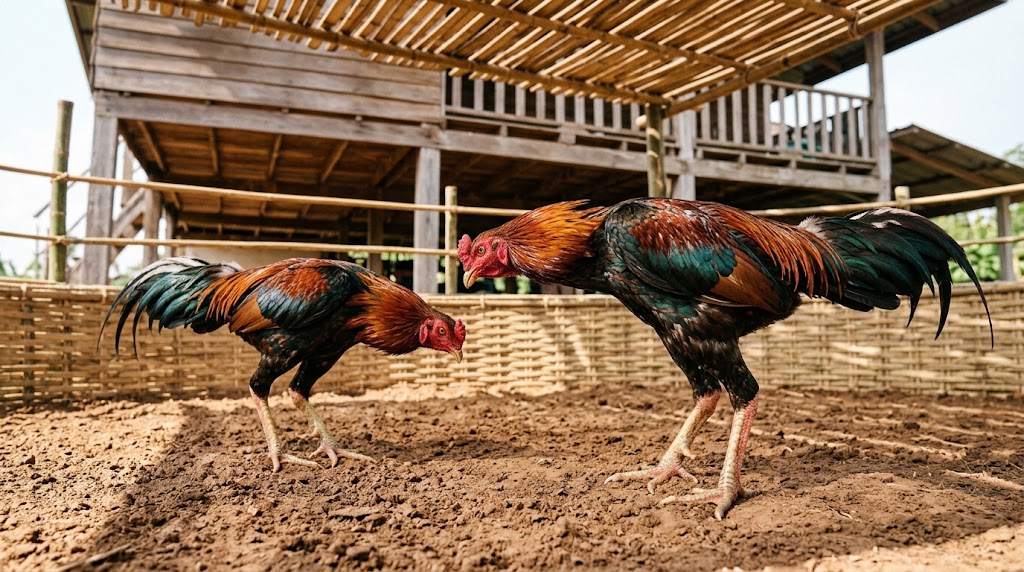
Gamecock Breeds: Types, Characteristics and How to Identify Them
Gamecock Breeds is a term commonly used for chicken breeds with documented historical connections to game-fowl traditions. Recognized examples include Aseel, Shamo and Old English Game. However, not every familiar name used among gamefowl breeders represents a formally recognized breed; some names refer instead to strains, bloodlines or other breeding populations.
Understanding fighting rooster breeds therefore involves more than memorizing names. Reliable identification starts with recognized breed information and then compares several physical characteristics together. Appearance can support identification, but it cannot by itself establish documented ancestry.
Key Takeaways
- Aseel, Shamo and Old English Game appear in established poultry breed records.
- Breed, variety, strain and bloodline are related terms, but they do not mean the same thing.
- Body carriage, structure, comb, legs and feathering can help narrow breed identification.
- One visible trait, such as color, is not enough to confirm a breed.
- Phenotypic characteristics can support classification, while genetic information can provide additional evidence about population relationships and identification.
- Names such as Kelso, Hatch and Sweater should not automatically be classified as formal breeds without an authoritative breed-standard source.
What Are Gamecock Breeds?
In practical use, gamecock breeds are recognized chicken breeds or established breed populations historically associated with game-fowl traditions. Formal breed identity is broader than a breeder’s family line or an informal community name.
The American Poultry Association maintains accepted breed and variety listings within its standard-setting framework. Its listings include Aseel, Shamo and Old English Game. American Poultry Association — Accepted Breeds & Varieties.
This distinction matters because two names can both be common in gamefowl discussions without having the same classification. One may identify a recognized breed, while another may refer to a strain or bloodline within a wider breeding population.
A related introduction to the wider subject is Gamefowl Breeding Techniques.
Breed, Variety, Strain and Bloodline: What Is the Difference?
| Term | Meaning | What It Helps Describe | What It Does Not Establish |
|---|---|---|---|
| Breed | A recognized chicken population with an established identity and characteristic set of traits. | Broad breed identity and breed standards. | That every individual bird looks or inherits traits identically. |
| Variety | A recognized form within a breed, commonly distinguished by standardized features such as color or other visible characteristics. | Variation recognized within a breed. | That it is a separate breed. |
| Strain | A narrower breeding population maintained within or alongside a wider breed population. | A more specific breeding background. | Formal breed recognition by itself. |
| Bloodline | A breeder term commonly used for descent or pedigree within a breeding population. | Family ancestry or breeding descent. | That the name is a separate recognized breed. |
The safest approach is to check how an authoritative poultry source classifies a name before calling it a breed. Everyday gamefowl terminology does not always follow formal poultry classification.
Examples of Recognized Gamecock Breeds
Aseel / Asil
Aseel, also spelled Asil or Azeel, is a recognized heritage chicken breed with a long history in South Asia. The Livestock Conservancy describes the breed as compact and heavily muscled, with an upright body position, tight hard feathering and yellow legs.
The alternative spellings do not by themselves indicate separate breeds. They are different forms of the name used for the Aseel breed. The Livestock Conservancy — Aseel Chicken.
These documented traits are useful identification clues, but an individual bird should not be identified as Aseel from one feature alone.
Shamo
Shamo appears in the American Poultry Association’s accepted breed and variety listings. Its history is closely connected with older Asian game-fowl populations; The Livestock Conservancy describes its ancestry as linked to Asil/Aseel-type chickens taken from Pakistan and India through Siam, now Thailand, to Japan.
Shamo is documented as a tall, upright breed with a muscular body, well-muscled thighs, close-held hard feathering and a pea comb. Variation exists within the wider Shamo population, which is another reason that one silhouette alone should not be treated as complete identification. The Livestock Conservancy — Shamo Chicken.
Old English Game
Old English Game is another established chicken breed found in poultry breed records. The American Poultry Association lists Old English Game varieties, while historical poultry standards provide detailed descriptions of the breed.
Published Old English Game standards describe characteristics including a short back, broad breast, muscular thighs, strong legs, hard plumage and active carriage. Multiple recognized colors and varieties also exist, so color alone should not be used as proof of breed identity.
Open Poultry Standards Australia — Old English Game.
For identification purposes, the important point is not to assume that every chicken associated with an older game-fowl tradition belongs to Old English Game. Its physical characteristics should be compared with breed information, while ancestry requires additional records when available.
Readers exploring the wider online gamefowl context may also encounter เว็บตรง ปลอดภัย. It is separate from the breed authorities cited above.
What About Kelso, Hatch and Sweater?
Kelso, Hatch and Sweater are well-known names in gamefowl discussions, but a familiar name should not automatically be promoted to formal breed status.
Classification note: A familiar gamefowl name should not automatically be treated as a formally recognized breed. Aseel, Shamo and Old English Game appear in established poultry breed records, while names such as Kelso, Hatch and Sweater should be classified cautiously unless an authoritative breed-standard source establishes their formal breed status.
The authoritative breed sources used here do not provide a basis for placing Kelso, Hatch and Sweater in the same formal breed category as Aseel, Shamo or Old English Game. Without a recognized breed-standard source, it is more accurate to treat their classification cautiously and avoid presenting them as formally recognized breeds.
This distinction is useful whenever a list mixes established breeds with breeder lines or community terminology. Popularity of a name is not the same thing as formal breed recognition.
Gamecock Breed Characteristics
Gamecock breed characteristics can help narrow identification when several traits are considered together.
| Characteristic | How It Can Help | Limitation |
|---|---|---|
| Body carriage | Helps distinguish upright breeds from breeds with a more horizontal profile. | Posture alone cannot confirm ancestry. |
| Body structure | Frame, chest, neck and muscular development can match documented breed descriptions. | Individual birds can vary within a breed. |
| Comb | Comb type can be compared with the recognized description of a breed. | Similar comb types occur in more than one breed. |
| Legs | Leg length, stance and shank characteristics can provide additional clues. | They should be interpreted with other features. |
| Feathering | Feather texture and how closely feathers are held to the body may help distinguish breeds. | Feathering alone is insufficient for identification. |
| Recognized variety | Color or another standardized variety can narrow identification within a breed. | Similar colors may occur in unrelated breeds. |
The strongest visual identification comes from a combination of characteristics rather than one prominent feature. Research on chicken classification also uses both phenotypic characteristics and genetic information, illustrating why morphology and ancestry-related evidence answer different parts of the identification question.
How to Identify Gamecock Breeds
Gamecock breed identification becomes more reliable when documented breed information and physical characteristics are evaluated together.
- Check whether the name is a recognized breed. Start with a poultry-standard or established breed-conservation source.
- Compare overall body structure. Look at carriage, frame, neck, chest and general proportions.
- Compare the comb and legs. These features can help separate breeds with otherwise similar body shapes.
- Examine feathering. Feather texture and how closely feathers are carried can provide additional clues.
- Check recognized varieties. Color is useful only when interpreted within the recognized varieties of a breed.
- Use ancestry records when available. Pedigree or breeder records provide information that appearance cannot establish.
- Use genetic evidence when formal population identification is required. Genetic markers can provide evidence that is not available from appearance alone.
A 2024 study indexed by FAO AGRIS on Thai native chickens specifically addresses classification using morphological characteristics together with genetic diversity and genetic-marker information. This supports treating visible characteristics as useful classification evidence while keeping them distinct from genetic evidence about population relationships. FAO AGRIS — Classification and Genetic Diversity Analysis of Thai Native Chicken.
This approach is more reliable than deciding a breed from color, size or posture alone.
Can Appearance Alone Confirm a Breed?
No. Appearance can support identification, but it cannot independently establish documented ancestry.
Different breeds can share visible characteristics, and variation also exists among individuals within the same breed. Morphological traits are therefore useful for comparison and classification, but ancestry and genetic relationships require evidence beyond visual resemblance when formal confirmation is needed.
The distinction is supported by poultry research that evaluates phenotypic characteristics alongside genetic markers and genetic diversity rather than treating appearance and genetic identity as interchangeable evidence.
Physical identification is strongest when it agrees with recognized breed information and reliable ancestry or genetic information.
Why Some Gamecock Names Are Confusing
Confusion arises because several naming systems can appear in the same conversation. A name may describe:
- a formally recognized breed;
- a recognized variety within a breed;
- a breeder-maintained strain;
- a bloodline;
- a regional or traditional label; or
- an informal community name.
That is why a simple list of fighting rooster types can be misleading when every name is presented as though it belongs to the same classification level.
The more useful question is not only “What is this bird called?” but also “Is that name a recognized breed, a variety, a strain or a bloodline?”
How to Compare Different Gamecock Breeds
Comparison is most useful when it focuses on documented breed identity and characteristics rather than reputation.
| Comparison Area | Useful Evidence | What to Avoid |
|---|---|---|
| Breed identity | Recognized breed records or standards | Assuming every familiar name is a breed |
| Physical characteristics | Breed-specific descriptions | Applying one breed’s traits to all gamefowl |
| Variety | Recognized forms or colors within the breed | Treating every color difference as a separate breed |
| Ancestry | Pedigree records or relevant genetic evidence | Inferring lineage from appearance alone |
| Performance | Direct, relevant evidence | Ranking breeds from reputation or anecdote |
This distinction is especially important when comparing types of fighting rooster breeds. A breed classification describes identity; it does not by itself establish superiority for a particular purpose.
Common Identification Mistakes
- Using color alone: similar colors can occur in multiple breeds and varieties.
- Calling every bloodline a breed: pedigree terminology and formal breed recognition are different concepts.
- Generalizing from one bird: individual variation occurs within recognized breeds.
- Ignoring established breed information: informal usage may classify names differently from poultry-standard authorities.
- Treating resemblance as proof of ancestry: visual characteristics can support identification but cannot replace ancestry or genetic evidence when formal confirmation is required.
Another site readers may encounter in the wider gamefowl context is เว็บพันธมิตร. It is not used to establish breed classification or characteristics.
What Breed Information Can Tell You
Breed records are useful for understanding recognized identity, documented characteristics and the differences among established breeds.
They can help answer whether a name represents a recognized breed and whether a bird’s physical features are broadly consistent with that breed. They cannot establish an individual bird’s complete ancestry from appearance alone.
For formal population-level classification, morphological observations can be supplemented by pedigree information or genetic evidence. The type of evidence needed depends on whether the question concerns visual consistency with a breed description or documented biological ancestry.
Key point: Breed standards and breed records are classification tools. Physical characteristics provide identification clues, while pedigree and genetic information can provide additional evidence about ancestry and population relationships.
Summary
Gamecock Breeds include recognized chicken breeds associated with game-fowl traditions, with Aseel, Shamo and Old English Game providing clear examples in established poultry records.
The central distinction is between a recognized breed and names used for varieties, strains or bloodlines. Kelso, Hatch and Sweater should not automatically be labeled formal breeds without an authoritative source establishing that status.
Body carriage, structure, comb, legs, feathering and recognized varieties can all help with identification. No single physical feature is enough to prove ancestry by itself. Where stronger confirmation is required, pedigree or genetic evidence can provide information beyond visual comparison.
FAQ
What are the main gamecock breeds?
Recognized breeds associated with game-fowl traditions include Aseel, Shamo and Old English Game. Other familiar names may refer to strains or bloodlines rather than formally recognized breeds.
Is Aseel the same as Asil?
Yes. Aseel and Asil are alternative spellings used for the same breed name. The Livestock Conservancy also records the spelling Azeel.
Is Shamo a recognized chicken breed?
Yes. Shamo appears in the American Poultry Association’s accepted breed and variety listings. Its historical ancestry is also linked by The Livestock Conservancy to older Asian game-fowl populations, including Asil/Aseel-type chickens.
Is Old English Game a recognized breed?
Yes. Old English Game appears in established poultry breed records and standards. Breed-specific standards describe characteristics such as body structure, hard plumage, muscular thighs, leg structure and carriage, along with multiple color varieties.
Are Kelso, Hatch and Sweater breeds?
They should not automatically be classified as formally recognized breeds without an authoritative breed-standard source. These names may be used differently within gamefowl breeding communities.
How can you identify a gamecock breed?
First confirm that the name is a recognized breed, then compare several characteristics such as body structure, carriage, comb, legs, feathering and recognized varieties. Pedigree or genetic information can provide additional evidence that appearance alone cannot establish.
Can color alone identify a gamecock breed?
No. Similar colors can occur in multiple breeds. Color is most useful when it matches a recognized variety and is considered together with other breed characteristics.
What is the difference between a breed and a bloodline?
A breed is a broader recognized chicken population with an established identity and characteristic traits. A bloodline is a breeder term describing descent or pedigree within a breeding population and does not automatically represent a separate formal breed.
References
American Poultry Association. Accepted Breeds & Varieties.
The Livestock Conservancy. Aseel Chicken.
The Livestock Conservancy. Shamo Chicken.
Open Poultry Standards Australia. Old English Game.
FAO AGRIS. Classification and Genetic Diversity Analysis of Thai Native Chicken.